Guest
on 20 July 2017
This is the second post in a series of two by guest bloggers from Husarion; Domink Nowak and Michal Zieliński. The first blog can be read here. This blog picks up on why Husarion use Ubuntu…
Ubuntu has a very wide collection of packages, both in official repositories and supplied by third-parties. For example, the Robot Operating System provides pre-built ARM packages solely for Ubuntu. The wide collection is especially important in the case of embedded devices, where compilation from source is inconvenient – you either have to cross-compile the package on a separate machine or try to compile the software on the device itself, hoping it won’t run out of RAM. 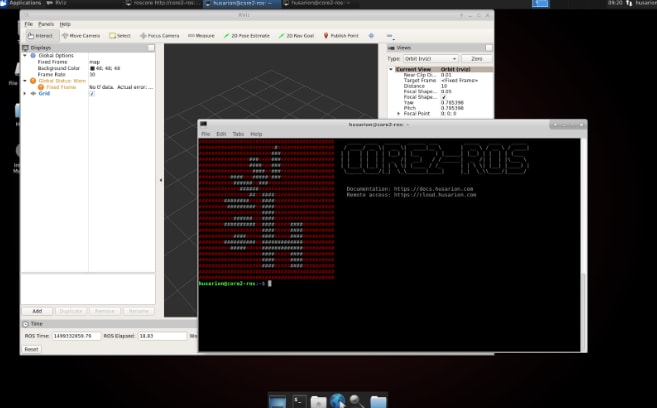
Fig. CORE2-ROS running Ubuntu with Xfce Desktop Environment
Ubuntu is the most familiar distribution among Linux users. While in most cases the system runs in headless mode, users can easily run full desktop (either via monitor or RDP connection), for example, to locally debug an application. Typical embedded operating systems don’t package desktop environments. Ubuntu has great cross-compilation support – a feature called ‘multi-arch’ allows installation of packages from foreign architectures. For example, I can install ARM version of OpenSSL (`apt install libssl-dev:armhf`) on my desktop system, compile my code using Ubuntu-supplied cross-compiler (`apt install gcc-arm-linux-gnueabihf`) and copy it directly to CORE2-ROS powered by Raspberry Pi or ASUS Tinker Board.
Modern robots are ROS-powered
ROS has become a standard for a new robot design. To help people learn this great set of tools and software, the Husarion team prepared a series of ROS tutorials available right now at husarion.com with more new topics coming soon. 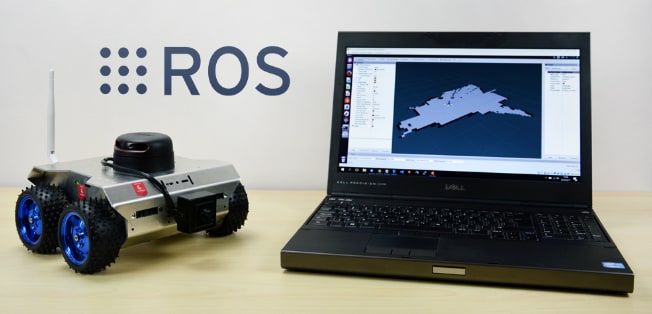 Fig. ROSbot robot platform with CORE2-ROS inside
Covered topics are:
- ROS introduction
- Creating nodes
- Simple kinematics for mobile robot
- Visual object recognition
- Running ROS on multiple machines
- SLAM navigation
These tutorials can be realised using ROSbot – the open-source autonomous robot platform, but even without having the robot materials from this course are useful. Husarion CORE2 hardware constitutes a good choice for a computer for your new robot design. Built-in interfaces widely used in robotics don’t force users to integrate additional boards, making devices more reliable. Mobile and web developers around the world can innovate and create completely new services that improve our everyday life. It all happens because of the mature, easy to use tools and frameworks. Husarion focuses on creating similar, friendly and a simple environment for robot development to allow even a beginner engineers to build advanced robots and take a part in the next industrial revolution. So don’t just sit there. Make a robot or two. It’s now easier than you thought!